What should you look for in a GEO tool?
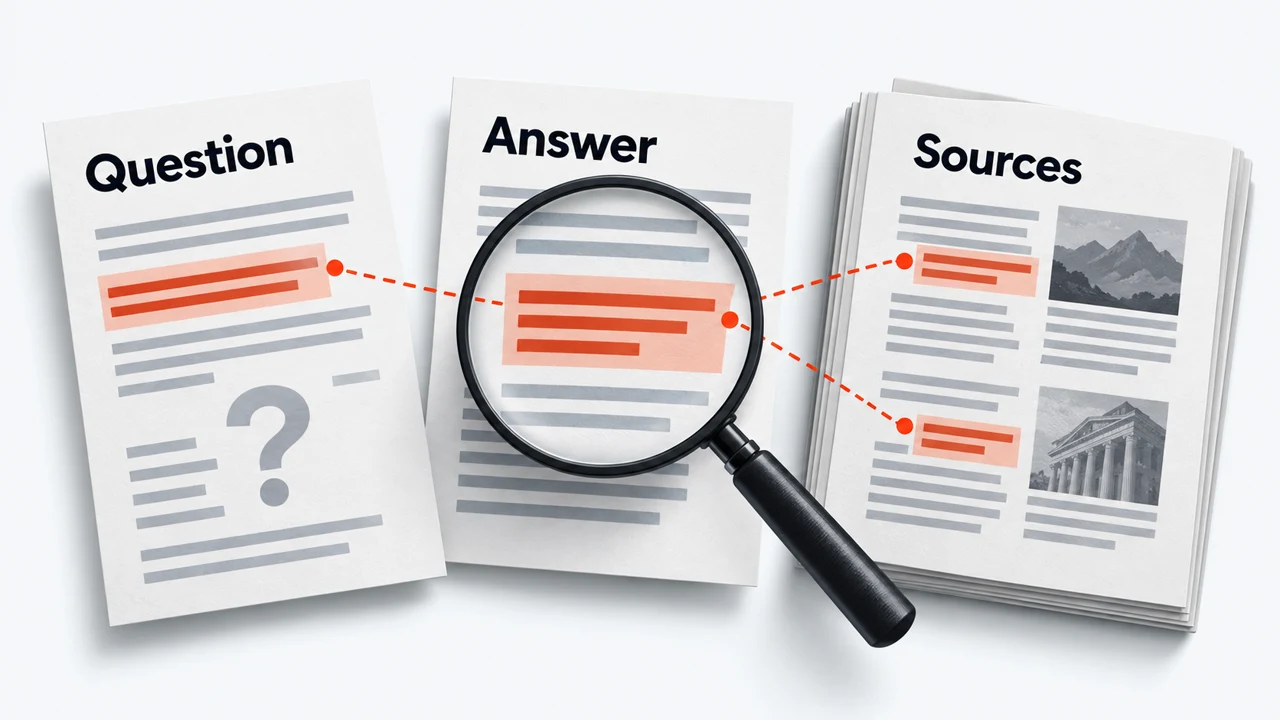
Choose a tool that lets you inspect the questions, answers and source evidence behind its result. It should explain which AI experience was measured, show failed observations and distinguish mentions from recommendations. Then consider whether its workflow, access and cost fit your team. A website-readiness score and an observed answer result serve different decisions.
Begin with your team’s decision
Describe the decision you need to make: clarify a product description, understand which sources an answer uses or see whether the answer suggests your offering for a relevant need. The tool should help you reach that decision through evidence you can inspect.
Sources: How Ready Scan builds an AI visibility scorecard; The Ready Scan report guide
A practical evaluation checklist
Use these questions when reading documentation or opening a sample report. They are selection criteria, not ratings of particular vendors.
Questions to ask before choosing a measurement tool
Scroll to read all columns.
| Criterion | Question | Useful evidence |
|---|---|---|
| Question control | Can I see and correct what is asked? | Saved wording and its buyer need. |
| Scope | Which AI product, configuration and period are covered? | A clear scope statement and acquisition context. |
| Answer access | Can I read the complete answer behind the score? | Surrounding recommendation wording. |
| Sources | Can I inspect what supports the answer? | Source URLs tied to the observation. |
| Coverage | What happens to missing or failed answers? | Completed/planned counts and exclusions. |
| Interpretation | Are mentions distinguished from recommendations? | Explainable labels with inspectable evidence. |
| Refresh | What changes when I refresh or edit a question? | A clear refresh policy and scope changes. |
| Access and cost | Who can run it, and what needs confirmation? | Current entitlement and execution conditions. |
Sources: How Ready Scan builds an AI visibility scorecard; The Ready Scan report guide; Sources behind AI answers
Understand the result you are choosing
A technical inspection can show whether information is accessible. An answer measurement can show what a selected system returned. First-party search reporting supplies another view of published citation activity. Ask which output the tool produces. Bing describes citation share as observational, rather than traffic share or a content quality score.
Sources: Optimizing your website for generative AI features; AI visibility insights: intent, topics and citation share; How Ready Scan builds an AI visibility scorecard
Read one report all the way through
Open an existing public or vendor-provided report. Pick one question, read the complete response, follow its source links and trace the classification back to the wording. Ask how any unavailable evidence can be inspected. This checks whether the report helps your decision without commissioning a large comparison exercise.
Check the question
Does it describe a need the business can solve, or simply ask the AI about a brand already named?
Check the answer
Can you identify a recommendation, qualification, simple mention or absence in the text?
Check the evidence
Can you open the cited destination? Are missing cells explained rather than silently given a zero?
Sources: The Ready Scan report guide; Sources behind AI answers
Where Ready Scan fits
Ready Scan provides AI-visibility scorecards for marketers. An authorised user reviews website context and buyer questions before execution, then reads retained answers, citations, coverage and observed outcomes. This article is published by Ready Scan. The public report guide explains its result structure, and the methodology explains how the measurement is prepared and interpreted.
Sources: How Ready Scan builds an AI visibility scorecard; The Ready Scan report guide
Make a proportionate choice
Select the smallest workflow that answers the current decision. A team clarifying one product page may benefit more from relevant questions and inspectable answers than from a large dashboard. A team managing several businesses also needs appropriate account and data-access boundaries. Confirm current costs and access conditions in the product before execution; do not assume unlimited work from a marketing label.
Sources: How Ready Scan builds an AI visibility scorecard; The Ready Scan report guide
Sources
- How Ready Scan builds an AI visibility scorecardReady Scan · Accessed
- The Ready Scan report guideReady Scan · Accessed
- Buyer questions for AI visibilityReady Scan · Accessed
- Sources behind AI answersReady Scan · Accessed
- Optimizing your website for generative AI featuresGoogle Search Central · Accessed
- AI visibility insights: intent, topics and citation shareMicrosoft Bing · Accessed
Read next
See the evidence behind your brand’s visibility.
Prepare a relevant question set, then inspect the answers and sources in a Ready Scan scorecard.
Check my brand